

Performance Characteristics
- Compatible with thin, large-format porcelain slabs in sizes up to 1620 × 3240 mm
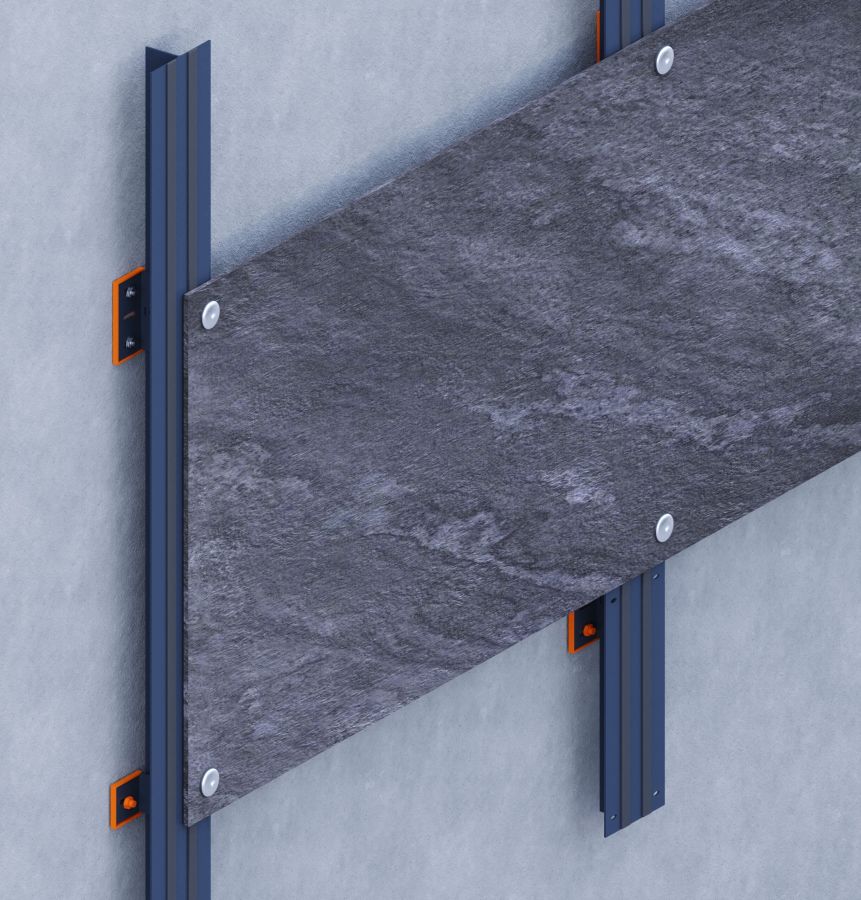
- Visible mechanical fixation using 316 stainless steel rivets.
- Supports both vertical and horizontal panel installation.
- Aluminum frame engineered to resist wind loads and meet project-specific structural requirements.
- Panels can be cut and drilled on-site using precision equipment.
- Dry installation system without use of adhesives or mortars.
- Allows for easy removal and replacement of individual panels.
- Sub-structure spacing and bracket sizing determined based on wind pressure and insulation thickness.
- Compliant with performance standards related to structural integrity, durability, and maintenance access.


Component Breakdown
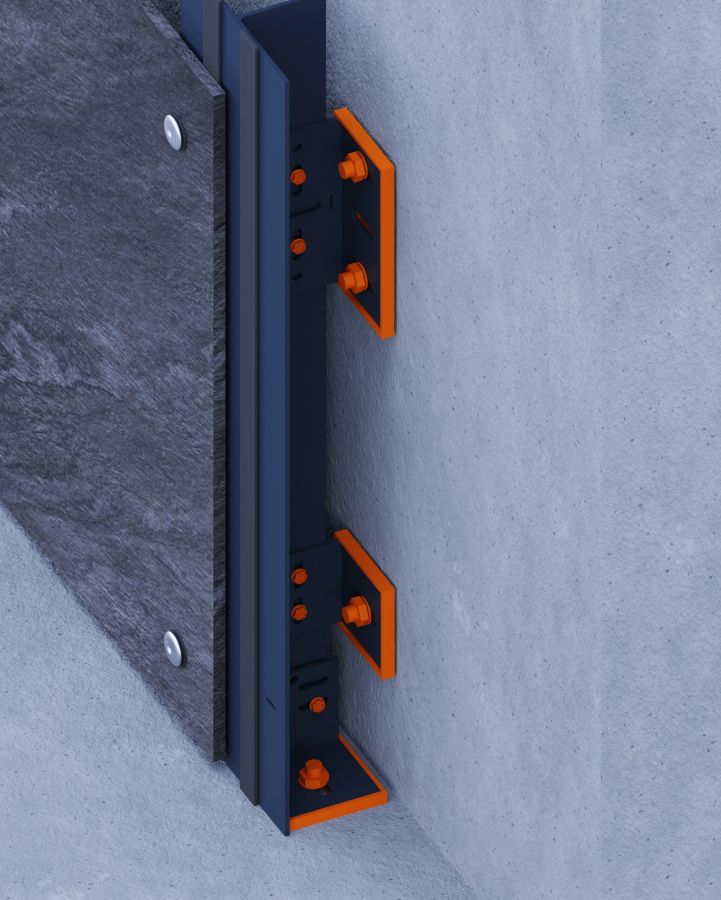
- Brackets & Thermostop: Transfer loads to structure and define the ventilated cavity
- Strut Profiles (L & T): Rigid, inter-locking vertical carriers that lock into panel grooves
- Clips & Anchors: Precision engagement with ceramic grooves for rock-solid retention
- Accessories: Modular, interchangeable add-ons (scaffold clamps, fire-stop anchors, patch-fix kits)
- Thermal Break Pads: Placed between brackets and structure to reduce thermal bridging and galvanic reactions
- Stainless Steel Self-Drilling Screws: Used to fix brackets, clips, and aluminum profiles
- Aluminum Brackets: L-shaped or custom profiles that define cavity depth and transfer façade loads
- Thermal Break Pads (optional): Reduce thermal bridging and prevent material incompatibility
- Vertical Aluminum Profiles: T- and L-shaped vertical rails for fixing clips and tile alignment
- Rivets: Exposed mechanical fasteners in 316 stainless steel for panel fixation
- Porcelain Slabs: Thin, large-format tiles with pre-drilled holes to accommodate rivets
starting and crowning of the façade
outside corner
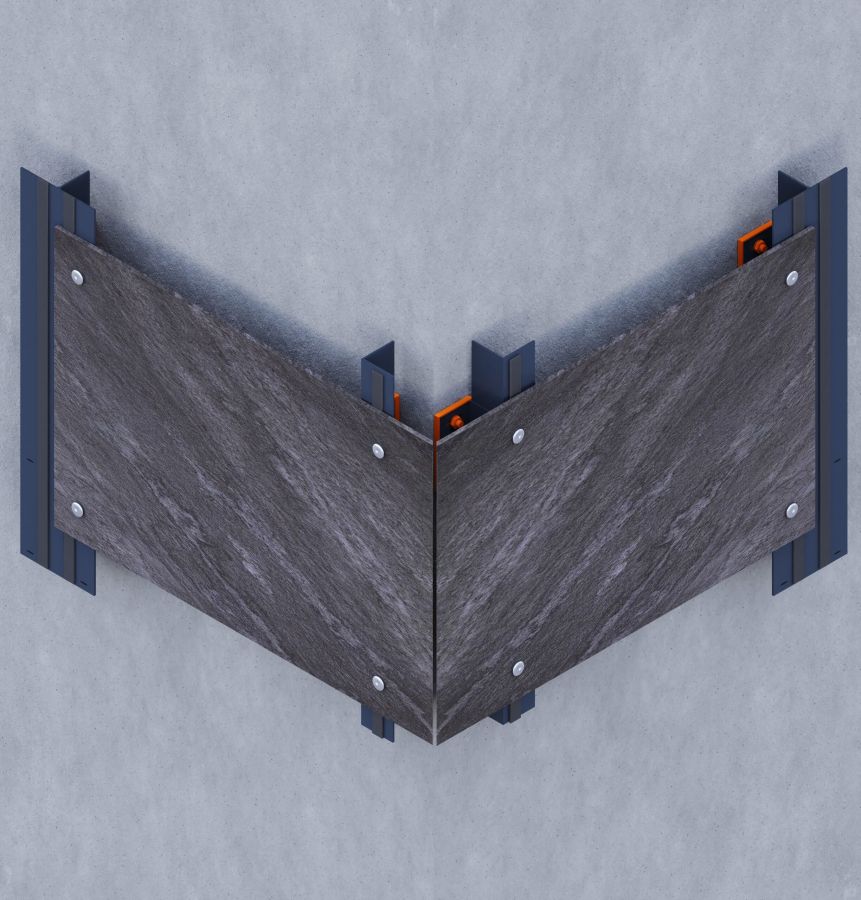
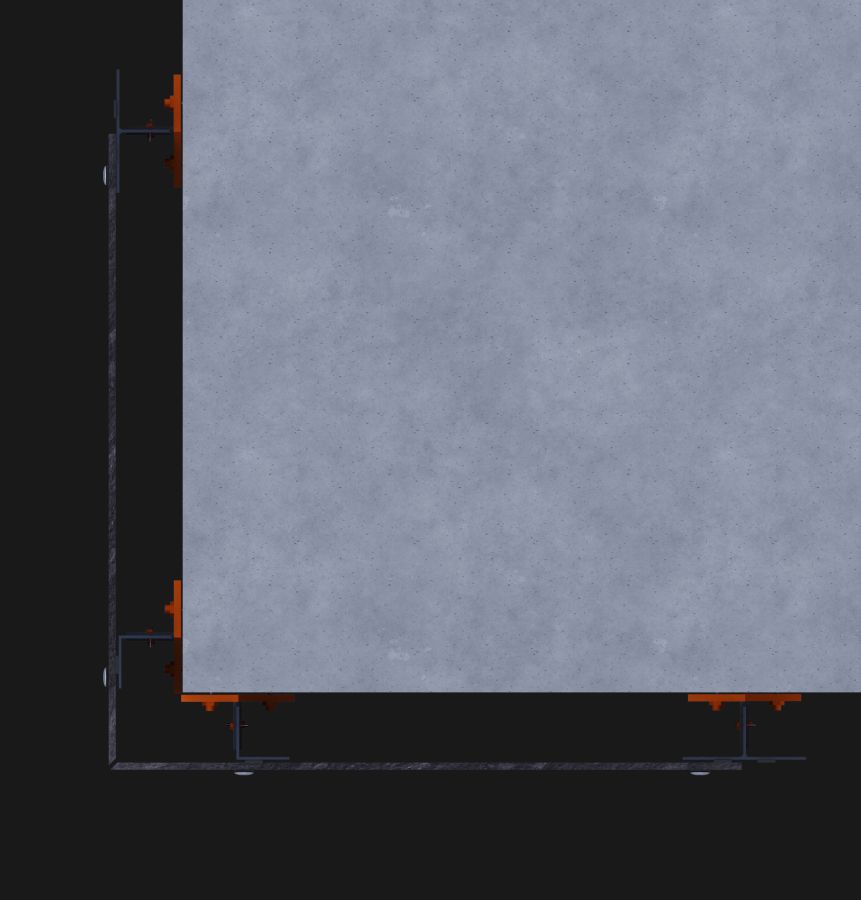
inside corner
facade and celing corner
window frame
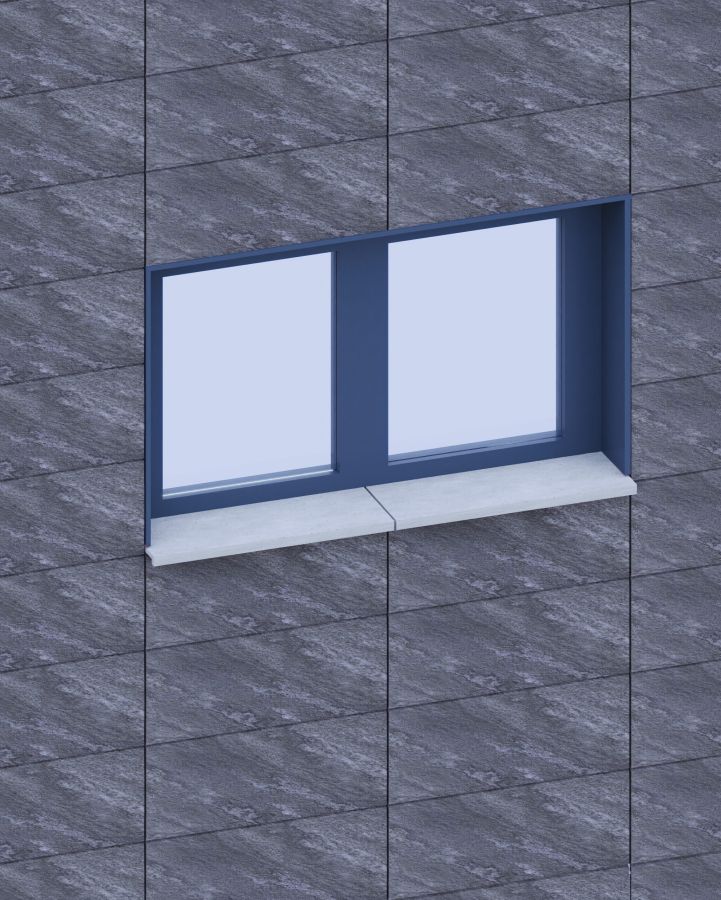
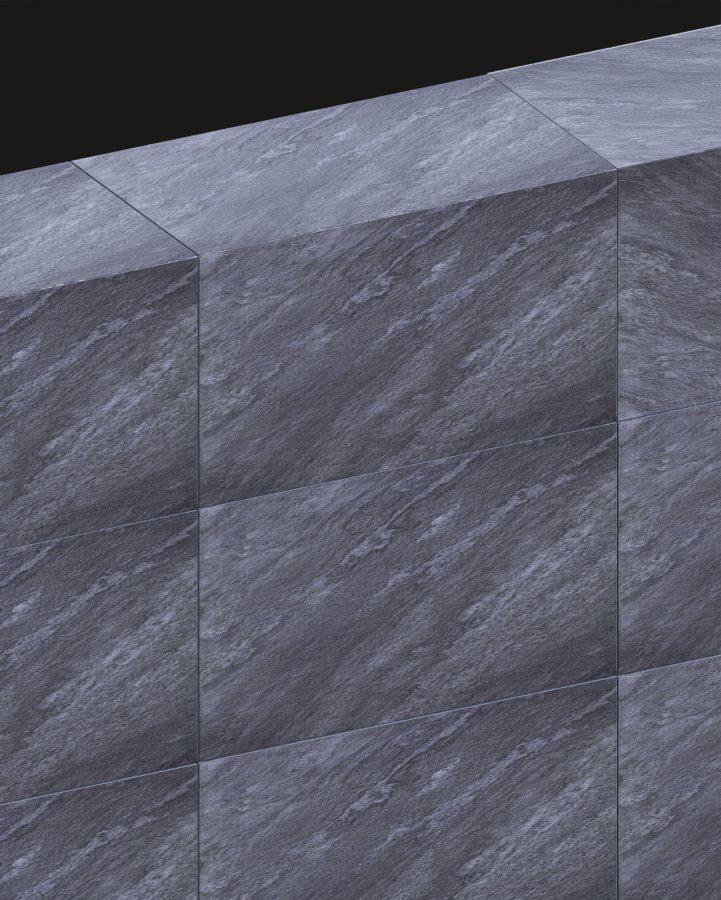
window frame and sill